OUR COMMUNITY

ABOUT BARANGAY
KANGHA-AS

People • Land • Faith • Family • Education • A Brighter Tomorrow

Barangay Kangha-as community logo

ABOUT BARANGAY KANGHA-AS

About Barangay Kangha-as

Barangay Kangha-as is a small but closely united community in Hilongos, Leyte, home to more than a hundred households and a population of around 300 residents. While our community may be modest in size, our aspirations are not.

Our community is also rooted in agriculture. Farming and coconut production are among the primary sources of livelihood for the people of Kangha-as. Our rice fields and coconut lands are not only part of our landscape but also an important source of income and sustenance for many families. Through the hard work of our farmers, we continue to value the land, appreciate the fruits of honest labor, and recognize the important role of agriculture in sustaining our families and community.

Our people are bound by a strong sense of faith, family, peace, and unity. With the majority of our residents being Catholics, faith continues to be an important part of our community life and the heart of every family. It guides our values, strengthens our relationships, and brings our people together.

One of the most meaningful expressions of our faith and unity is our annual Fiesta, a thanksgiving celebration in honor of our patron saint, Nuestra Señora del Santísimo Rosario (Sto. Rosario). It is a time when families come together to celebrate their faith, give thanks for the blessings received, and strengthen the bonds that connect our community.

Our fiesta is also a special time of homecoming. We warmly welcome our fellow Kangha-as residents who work, study, or live in different places and return home to celebrate with their families and neighbors. As part of this tradition, we hold a Welcome Party Night, where we gather together, share food and stories, enjoy one another's company, and celebrate the return of our community members. For many, the fiesta is more than a yearly celebration—it is a reminder that “No matter where life takes us, Kangha-as remains home.”

Another meaningful tradition during our fiesta is our Senior Citizens Night, where we give special recognition and appreciation to our senior citizens. We believe that our elders are an important part of the foundation of our community. Their years of experience, sacrifices, wisdom, and contributions have helped shape the Kangha-as that we know today. Through this special evening, we give them an opportunity to enjoy, socialize, and celebrate together while reminding them that they remain valued, respected, and an important part of our community. It is our way of saying thank you to the generation that came before us and helped build the community we now call home.

Kangha-as is a community of hardworking parents who believe deeply in the importance of education. Through their sacrifices, determination, and ambition, they continue to encourage their children to pursue their studies and build meaningful careers. Over the years, many of our young people have grown to become professionals in different fields, carrying with them the values and lessons they learned from their families and community.

We believe that the true strength of Kangha-as is not measured by the number of people who live here, but by the willingness of our people to live together in peace, respect one another, and work for the common good.

We are one Kangha-as—not because we are many, but because we choose to stand together.

We envision a community where peace and order are protected, where families can live with dignity and security, where children are encouraged to pursue education, where young people are given opportunities to grow, and where every resident has a role in building a better tomorrow.

Kangha-as is small in number, but united in purpose, rich in faith, strong in family, and ambitious for a brighter future.

Barangay Kangha-as
One Community. One Purpose. One Brighter Future.
HISTORY

THE HERITAGE OF BARANGAY KANGHA-AS

A STORY OF PLACE, PEOPLE, AND TRADITION

Long before Kangha-as became the barangay we know today, it was a small and peaceful settlement forming part of the larger Barangay Talisay in Hilongos, Leyte.

Because Talisay covered a wide area, Kangha-as was originally known as a sitio. According to the oral history passed down through generations, the area was formally recognized and assessed as a sitio during the Spanish period through the initiative of the Alcalde Mayor of Hilongos, following a recommendation from the Spanish Governor of Leyte.

At that time, Kangha-as was a quiet community surrounded by nature. Only a small number of families lived in the area, and much of the land was covered by trees, bamboo, fields, and waterways.

THE BEGINNING OF THE NAME

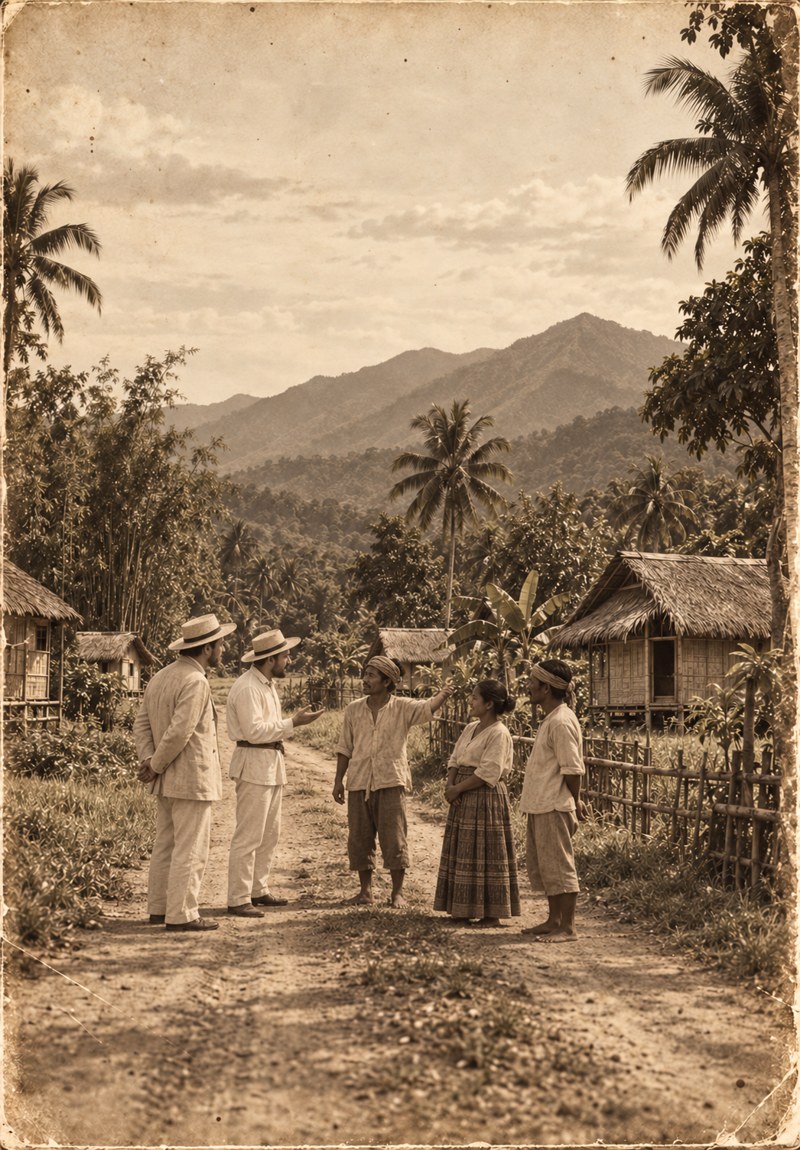
Sepia artistic recreation of Spanish visitors speaking with villagers beside nipa huts
Spanish visitors speaking with local villagers — an artistic recreation of the oral tradition.

One of the oldest stories of Kangha-as tells how the place came to be known by its name.

According to local oral tradition, around the year 1880, only about twelve families were living in the area. During this time, a group of Spaniards visited the settlement and asked the local inhabitants what the place was called.

The residents answered, “Kangha-as.”

Curious about the name, the visitors asked why the place was called Kangha-as. One of the natives then explained the natural feature that had long been associated with the area—the distinctive stream flowing through the settlement.

Thus, the name Kangha-as became part of the identity of the place and was passed from one generation to another.

THE KANGHA-AS STREAM

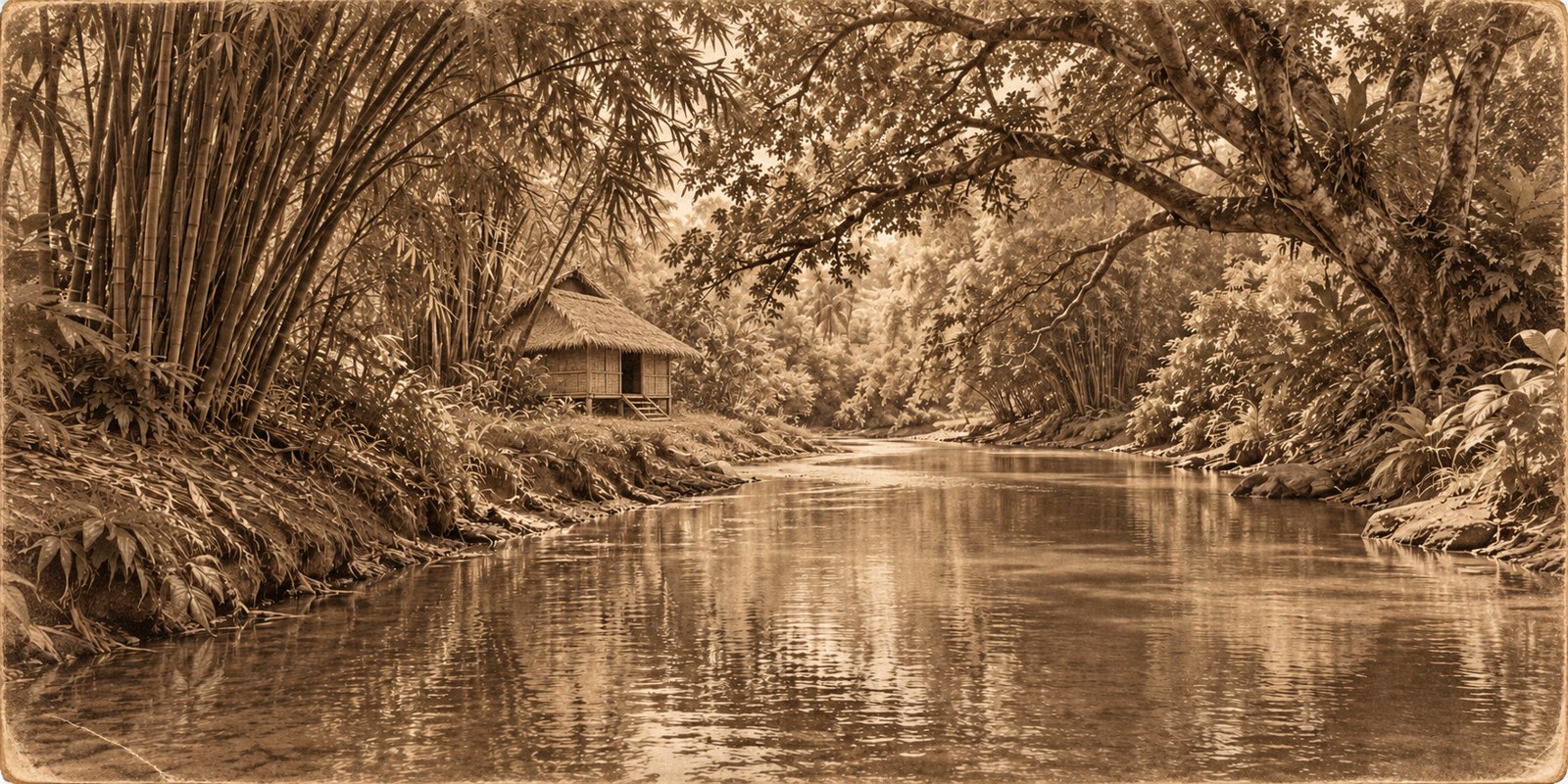
Sepia artistic recreation of the Kangha-as Stream with bamboo, overhanging trees and a nipa hut
The Kangha-as Stream and a nipa hut — an artistic recreation inspired by the barangay's heritage.

At the heart of the old community was the Kangha-as Stream.

In earlier times, the stream was surrounded by bamboo and large trees whose branches stretched over the water. It was a natural landmark that helped define the landscape and daily life of the people.

The stream was approximately four meters wide in some areas. Some portions were shallow, while others were deep enough for small boats to pass through. These boats were used to transport goods and supplies, connecting the people of the area with nearby communities.

The stream was also abundant with natural resources. Freshwater fish, eels, shrimp, crabs, and other aquatic life could be found in its waters. For the early inhabitants, the stream was not simply a waterway—it was a source of food, transportation, livelihood, and life itself.

THE STREAM THAT RESEMBLED A SNAKE

One of the most distinctive features of the Kangha-as Stream was its unusual and winding shape.

According to the traditional account, portions of the stream appeared to resemble a snake preparing to catch its prey. Its mouth joined the river and faced toward the southeast, while the body of the stream curved and wound through the surrounding landscape.

As it continued toward the northeast, its winding course gave the impression of a crawling snake, with the far end appearing like its tail.

This remarkable natural formation became part of the story and identity of Kangha-as.

NATURE'S NATURAL DRAINAGE

The Kangha-as Stream was also connected to smaller waterways coming from surrounding areas, including Campura, Baas, and Tabunok.

These waterways converged near the tail end of the Kangha-as Stream, creating a natural drainage system for the area. During periods of heavy rain and flooding, the waterways helped carry excess water toward the river that flows down to the sea.

For the early settlers, nature itself provided much of what the community needed—water, food, transportation, and drainage.

FROM A SMALL SITIO TO A COMMUNITY

From its beginnings as a small sitio of only a few families, Kangha-as gradually developed into a permanent and closely connected community.

Generations of families were born, raised, and built their lives here. The land was cultivated, homes were established, children grew up, and traditions were passed from parents to their children.

As the years passed, Kangha-as grew beyond its beginnings as a small settlement. What was once a quiet sitio became a community with its own identity, history, traditions, and aspirations.

OUR HERITAGE

The history of Kangha-as is more than the story of a name.

It is the story of people who lived close to nature and depended upon one another. It is the story of a stream that provided food and transportation, of families who established their homes, and of generations who carried the name Kangha-as forward.

Today, much of the landscape has changed. Roads, homes, schools, churches, and community facilities have become part of the modern barangay. Yet beneath these changes remains the history of the small settlement that once stood beside the winding stream.

The name Kangha-as continues to connect the present generation with those who came before.

It reminds us where we came from.

It reminds us of the land that sustained our ancestors.

And most importantly, it reminds us that a community's greatest heritage is not only its place, but the people who give that place its identity.

KANGHA-AS TODAY

Today, Barangay Kangha-as stands as a small but united community in Hilongos, Leyte.

Our community continues to grow while preserving the values that have guided generations before us—faith, family, unity, cooperation, peace, and love for our community.

From a small sitio surrounded by nature, Kangha-as has become a community with a story worth remembering and a future worth building.

This is our history.

This is our heritage.

This is Kangha-as.

OUR HOPE

Our Hope for the Next Generation

Today, a new generation is looking forward with greater ambition. Our young people are reaching higher, dreaming bigger, and striving for a brighter future—not only for themselves and their families, but also for the community they call home.

We hope to see our children grow through education, discover their potential, build meaningful careers, and one day return to contribute to the community that helped shape them.

Our hope is our children. Our future is Kangha-as.

OUR DIRECTION

MISSION

Our Mission

To serve the people of Barangay Kangha-as with integrity, transparency, fairness, and compassion; to responsibly use public resources for the community; promote peace, unity, and equal opportunities; and uphold the law for the welfare of every resident.

VISION

Our Vision

To build a peaceful, united, transparent, and progressive Barangay Kangha-as where every family lives with dignity, our children are empowered through education, and the next generation has a brighter future.

“We are one Kangha-as—not because we are many, but because we choose to stand together.”

One Community. One Purpose. One Brighter Future.